Honoring Indigenous People

Many cities and states in the U.S. have renamed Columbus Day (celebrated on the second Monday in October) as Indigenous Peoples’ Day and many places have made decisions to remove statues of Columbus. The city of Columbus, Ohio (named after Christopher Columbus) will no longer observe Columbus Day as a holiday and plans to remove a statue of Columbus from City Hall. The county will replace the holiday with Juneteenth, the celebration of the abolition of slavery.

Columbus Day became a federal holiday in 1937 as a way to honor Christopher Columbus’s achievements. Yet, the dark side of Columbus and the inhumane effects of colonization were largely ignored. He did not stake claim to uninhabited land. Indigenous people living on the land when Columbus (and later other colonists) arrived were enslaved, tortured, and murdered. Indigenous Peoples’ Day recognizes that Native people are the first inhabitants of the Americas and is a call to reframe history.

The stories of Native people have been omitted or whitewashed in history books. The genocide of Native Americans and the forced removal from their land and stripping of their identities, culture, and language when sent to boarding schools is rarely discussed.

As educators, we make choices everyday. We decide what books to read with our students. We decide whose stories are honored and whose are ignored. We decide what to say and what not to say and how we say it. Sometimes our choices make us complicit in the perpetuation of institutional racism.

So what can we do? We can make intentional decisions to ensure all voices and stories are honored and celebrated. Begin by talking with students about Indigenous Peoples’ Day. Ask: “Do you know what is special about today?” Follow students lead and guide them through a discussion to determine what they already know about Columbus Day and Indigenous Peoples’ Day. Invite them to share their own questions as a springboard for further inquiry.

As you engage in this work alongside your students, you may consider the following questions as a framework: Whose history has been told? Whose history has been silenced? ignored? or whitewashed? Who benefits as a result? How does that perpetuate inequities and injustice?

Create land acknowledgement statements such as the one created at Furman University where Katie teaches. We (Lester and Katie) both live on the ancestral homelands of the Cherokee people and Katie grew up on the land of the Haudenosaunee Confederacy in Upstate New York (also known as the Iroquois, the name given by the French colonists and therefore pejorative). Do you know whose land you live on? Do you know whose land your school resides? We invite you to research and learn about the first people of your own land.

You might read the book Encounter by Jane Yolen and discuss how this counternarrative as told by a young Taino child disrupts the dominant story of Christopher Columbus. Or you might view this short video from Adam Ruins Everything.

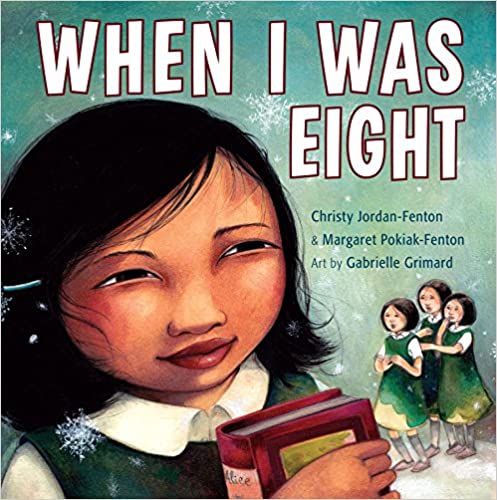
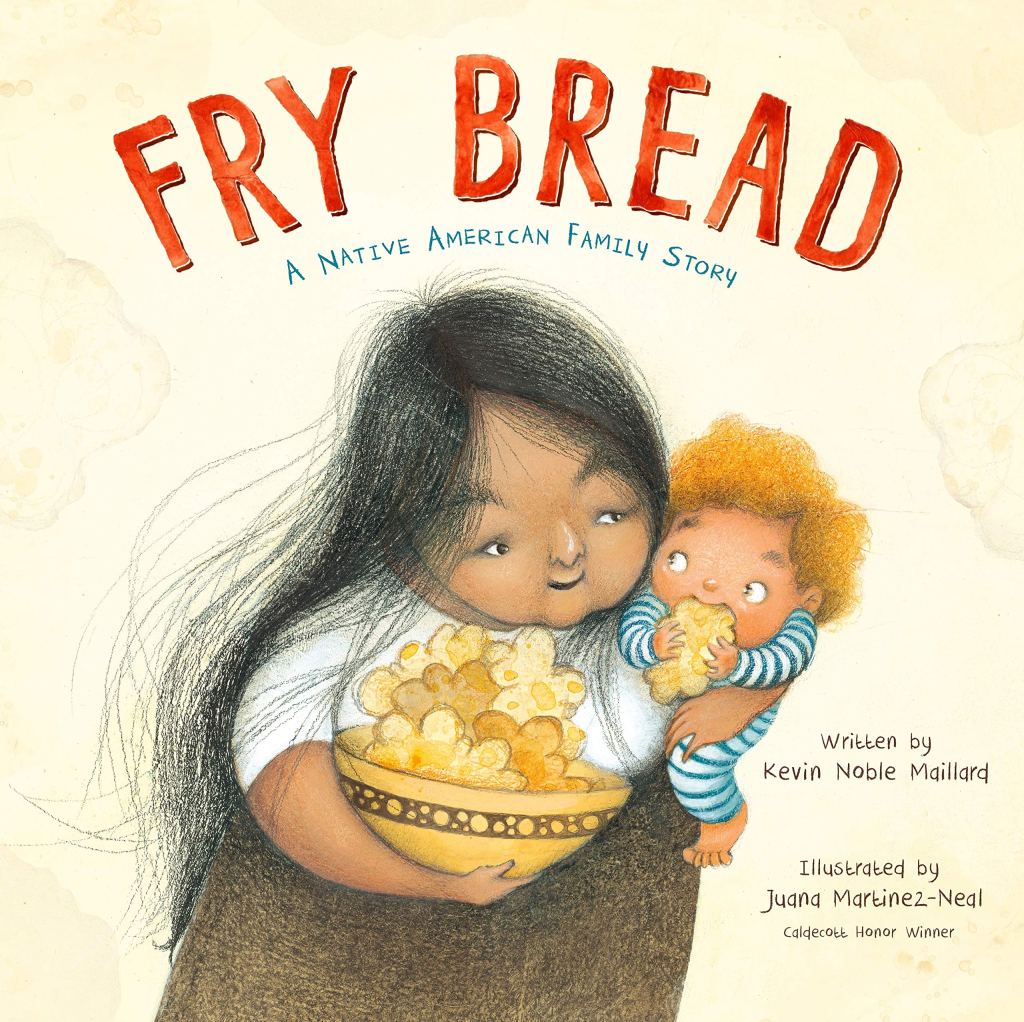
Additionally, share stories about and written by Indigenous authors, or #OwnVoice texts with your students all year long. Integrate these books into your bookshelves and your regular read alouds. Here are a few recommendations to get you started:

Picture Books:
Books for Upper Elementary and Middle Grades:

Prairie Lotus by Linda Sue Park

This book tells the story of Hannah who moves with her father to the South Dakota prairie in 1880. She makes friends with the indigenous people who lived on the land long before the white settlers arrived. Seen as dangerous savages by most of the townspeople, Hannah befriends them and learns from them. This is an important detail that honors the native people who were negatively portrayed in the Laura Ingalls Wilder series that was the inspiration for Park’s book. This book could lead to conversations around land acknowledgement and students can research which Indigenous tribe first owned the land where their school and homes are located. For instance, we acknowledge that we live on the land once belonging to the Cherokee and the Catawba. Additionally, this book could be a springboard for conversations about marginalized perspectives during the westward expansion. *Note: This book is part of the 2020 Global Read Aloud.
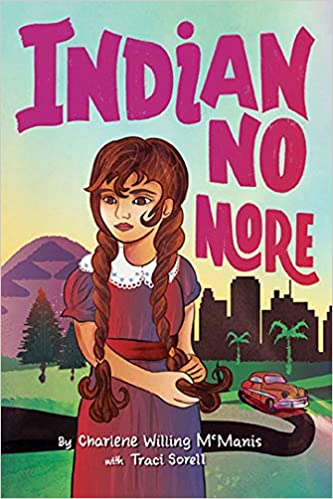
Indian No More by Charlene Willing McManis with Traci Sorell

This historical fiction novel is based on real events in the author’s life. It takes place during the 1950s on the Grand Ronde Tribe’s reservation. When the government passed the Indian Relocation Act of 1956 indigenous people were forced to move off reservations. They were told they would receive job training, transportation, a new home, and be assimilated. When faced with this situation, Regina and her family moved to Los Angeles and she becomes “Indian no more” and her life changes instantly. Her new neighborhood has more concrete than grass, new food, new friends, a larger school, and she and her new friends experience racism. Her grandmother (chich) helps her remember stories of her people and memories from the rez. *Note: This book is part of the 2020 Global Read Aloud.

Additional Resources:

An Indigenous Peoples’ History of the United States for Young People by Roxanne Dunbar-Ortiz Adapted by Jean Mendoza and Debbie Reese

This highly informative book is a must read as you expand your own understanding and knowledge of history and is appropriate for middle grades and young adults.

American Indian’s in Children’s Literature blog

National Museum of the American Indian

Five Ideas for Celebrating Indigenous Peoples’ Day from the Smithsonian

Reading to Make a Difference AT HOME!

Thanks to Covid-19 we are all quarantined at home  and learning to adjust to this new normal. We are aware that this pandemic brings on a variety of challenges from family to family. Thus, this is not a time for a packet of worksheets (whether paper or digital). This is not a time for endless clicking through hyperlinks and tasking of online activities. This is a time when we need to honor Maslow over Bloom. We must first begin by checking in on our children, their families, and our neighbors.

Ask: How are you doing? What do you need?

Consider engaging children in reading (and writing) to make a difference at home. In our book, Reading to Make a Difference: Helping Children to Think Deeply, Speak Freely, and Take Action, we offer a framework to help SELECT books for children to see themselves and others (using Rudine Sims Bishop’s notion of books as mirrors, windows, and doors). We then move children through a collection of intentionally selected books to engage them in rich conversation as they CONNECT and REFLECT on how their thinking has changed now that they’ve read the books. From there, children consider ways they can take ACTION to make a difference.

framework image

This is more important than ever before! Let’s engage children in meaningful reading experiences to make a difference. Reading to make a difference at home can also move through this framework. Consider the selection of books such as “Last Stop on Market Street” by Matt de la Pena. In fact, like many authors, he has taken to social media to connect with his readers and in a recent post he asks readers to consider the line when CJ’s Nana tells him: “Sometimes when you’re surrounded by dirt, you’re a better witness for what’s beautiful.”

Matt de la Pena asks us to consider: “What is something beautiful that you now see, that you couldn’t see before?”

To see the full post visit: Author Matt de la Pena on Facebook

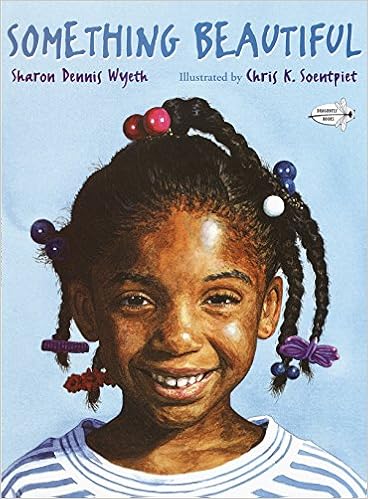
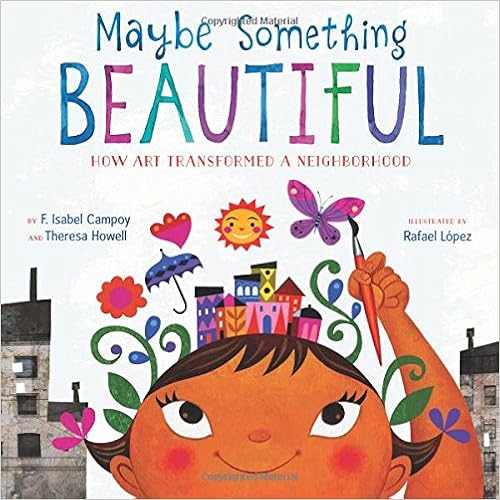
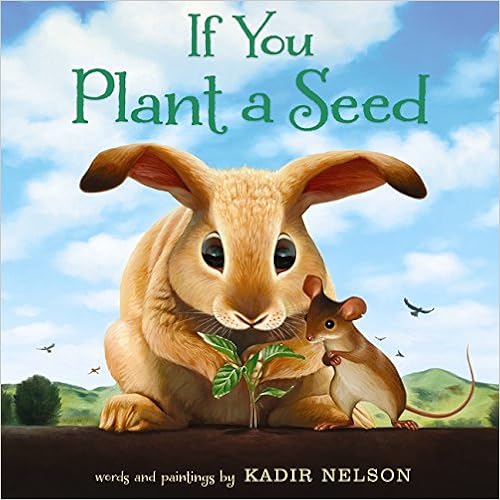
Other books to read that may inspire action in the home and in the community by considering “Something Beautiful” and acts of kindness during Covid-19 include:

For many lists of suggested books take a look at our book, “Reading to Make a Difference: Helping Children Think Deeply, Speak Freely, and Take Action”.

There are many available resources to help with access to books. Here’s a few resources  to get you started:

Access to Books

Free digital text – Pinterest

Creating a virtual class library – Clare Landrigan blog

What’s in Your Stack Google Template (see Clare Landigram’s blog for more info)

Lee & Low Books on YouTube (for read aloud)

Storyline Online (for read aloud)


Access to Informational Articles

News ELA

Time for Kids 

Scholastic News

Wonderopolis

Please share your favorite resources and we will update the blog with your suggestions. Thank you for making a difference! – Lester and Katie


Celebrating Our Book Birthday with a FREE Book Giveaway!

Especially in these times where we are practicing social distancing and spending more time at home, reading can make a difference. Reading can take us to far away places. Reading can expand our views and perspectives. And reading can validate and honor our stories. In our book, Reading to Make a Difference, learn how books can serve as springboards for critical conversations and lead children towards action to make a difference in the world!

We can’t believe it has already been one year since our book, Reading to Make a Difference was published! To celebrate the book’s first birthday, we are giving away a FREE copy! You can enter to win three times: (1) fill out this form, (2) retweet this post, and (3) post on Facebook and tag us.

Don’t forget to join our Reading to Make a Difference group on Facebook! And once you read the book please write a review on Amazon and GoodReads!

Be well and happy reading!
Love,
Lester and Katie

Screen Shot 2018-12-03 at 10.34.46 AM

Honoring African American Language

with guest blogger Nozsa Tinsley, 2/3 teacher, Center for Inquiry, Columbia, SC

As educators, we strive to create learning environments where children feel safe to explore identity, diversity, justice and activism throughout the curriculum. Foundational to all of our work is providing students with rich literature and learning experiences that allow all identities, cultures, and languages to be affirmed. If we are not cautious, our curriculum and literature can quickly become a representation of the majority culture, completely dismissing other cultures, including those within our own classrooms.

It is vital for kids to see and feel themselves in books in order to have their cultures, languages, and identities acknowledged (Bishop, 1990). We can promote these healthy and inclusive practices through literature, pictures, videos and curriculum that we choose. However, although our classrooms are microcosms of our larger diverse community, the dominant culture tends to be the only cultured centered in in many classrooms. For example, students are taught Standard American English (SAE), which for students of color, may sound and feel much different from that of their own home language. Students who come from households that speak SAE are always affirmed within the classroom, but what about our students who speak African American Language (AAL) or the many other languages that make up our country and our classrooms? Oftentimes Black students who are raised speaking AAL are told to “speak English”. Instead of seeing the home language of our students as a deficit, what if we make the conscious effort to affirm and build upon their culture?

In my classroom, we did a language study including African American Language to better understand the value and importance it represents. As we began our study of AAL, I was careful to choose books with Black characters that spoke the language, but that did so outside of slavery. This was in hopes of breaking the misconception that AAL is an uneducated language and to move beyond this as the only narrative presenting African American Language. The few picture books that I found included legends and fables. It was a challenge to find modern books including Black Americans who spoke AAL. When selecting books with AAL, I considered the following three questions:

  1. Does the book showcase Black families/people in a way that my kids can relate to (culture, customs, everyday life activities)?
  2. Does the book showcase Black families/people enjoying themselves?
  3. Does the book show Black families/people in a positive way?

Books featuring African American Language (AAL)

Picture Books

  1. Nettie Jo’s Friends by Patricia McKissack 
  2. Mirandy and Brother Wind by Patricia McKissack 
  3. Flossie and the Fox by Patricia McKissack 
  4. Honey I love by Eloise Greenfield
  5. The Barber’s Cutting Edge by Gwendolyn Battle-Levert
  6. The People Could Fly: American Black Folktales by Virginia Hamilton 

Chapter Books

  1. Stella by Starlight by Sharon Draper 
  2. One Crazy Summer by Rita WIlliams-Garcia
  3. Brown Girl Dreaming by Jaqueline Woodson
  4. Roll of Thunder, Hear My Cry by Mildred Taylor

Through the use of carefully selected literature, the kids recognized that African American Language (AAL) had patterns and rules just like that of Standard American English (see Figure 1). Taking a close look at the language allowed some students to gain new insights, while allowing others to unlearn some of the misconceptions they previously held (it’s wrong, improper, or just slang). By taking a close look at AAL, a language that is often dismissed, my AAL speakers were able to have their culture valued. Non AAL speakers experienced a new culture outside of their own. All of my students gained the knowledge and appreciation for a beautiful language.

Figure 1. Moving Between Languages (Translating) Anchor Chart

African American Language

Standard American English

scr- (scring) str- (string)
-in’ (weddin’) -ing (wedding)
gonna going to
past=present -ed (past tense)
-an’ (stan’) -and (stand)
‘cause because
d- (dat) th- (that)
be (She be sick a lot.) is (She is sick a lot.)

“It would be good if teachers could genuinely understand that Black English is not mistakes, it’s just different English, and that what you want to do is add an additional dialect to black students’ repertoire rather than teaching them out of what’s thought of as a bad habit, like sloppy posture or chewing with your mouth open.” – John McWhorter

Additional resources:

https://africanamericanlanguage.weebly.com

https://daily.jstor.org/black-english-matters/


Celebrating Hispanic Heritage Month

Hispanic Heritage Month is celebrated from September 15th – October 15th in commemoration of the histories, cultures, and contributions of American citizens and immigrants that have ancestral ties to Latin American and Hispanic countries located in North, South, and Central America. Countries like Costa Rica, El Salvador, Guatemala, Honduras, Nicaragua, Mexico, and Chile celebrate their anniversary of independence from Spanish colonization and rule. Celebrations include parades, festivals, concerts, and posts on social media wherever people who are tied to these countries are located, whether it is in the countries themselves or in spaces where descendants have immigrated to. Designating a month to bring attention to any group of people helps to raise the consciousness of all people. These designations are one step in the right direction, but only a small step toward the notion of full inclusion for all people. There is much work to be done if we are ever to see all groups being honored and celebrated every month, every day, all year. Let us work toward daily celebrations of our diverse and complex identities in our common humanity. 

Carefully selected literature read aloud and followed by open conversation can part the curtains on windows they never knew existed. In chapter five of Reading to Make a Difference: Using Literature to Help Students Think Deeply, Speak Freely, and Take Action, we introduce Alyssa Cameron’s fourth graders in South Carolina. Using the instructional framework (see introduction), Alyssa moved her students from reading an intentionally selected text to thoughtful conversations and student-driven action. When reading the book, Separate is Not Equal: Sylvia Mendez and Her Family’s Fight for Desegregation by Duncan Tonatiuh, the students learned about the discrimination including school segregation that Sylvia Mendez and her family faced as Mexican Americans living in California. This true story was eye opening as the students began to deepen their understanding of the racism that permeates through the United States in the past and into the present. The students were so moved by Sylvia’s story that they wanted to take action to inform others of the life and the actions of Sylvia Mendez and her family. They created a play for younger children, a presentation with slides for administration, and a letter to the editor of the “Who Was?” series requesting a book be written about Sylvia Mendez. This example demonstrates one way we can honor the contributions of Hispanic Americans. The graphic below illustrates the process these students followed in moving toward action. It begins with a small set of texts carefully selected to validate the experiences of some students while exposing others to information that may be new to them. Guided conversations typically lead to insights and connections and further reading. Time for reflection and writing often brings up the urge to take a stance and take action.

framework image.png
image from Reading to Make a Difference by Lester L. Laminack & Katie Kelly

For more information about this project and many others, you may want to read our book: Reading to Make a Difference: Using Literature to Help Students Think Deeply, Speak Freely, and Take Action.

For a list of additional books featuring Latinas, check out 60 Empowering Books Starring Latina Mighty Girls and 20 Latinx Children’s Books That Should Be On Your Shelf.  

See the source imageMy Papi Has a Motorcycle – https://www.npr.org/2019/08/25/753746555/my-papi-has-a-motorcycle-pays-loving-tribute-to-a-california-childhood

Other resources: